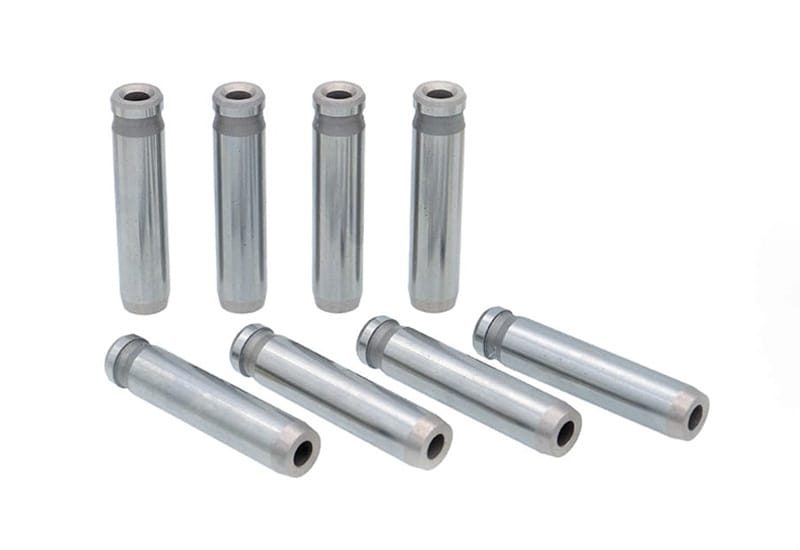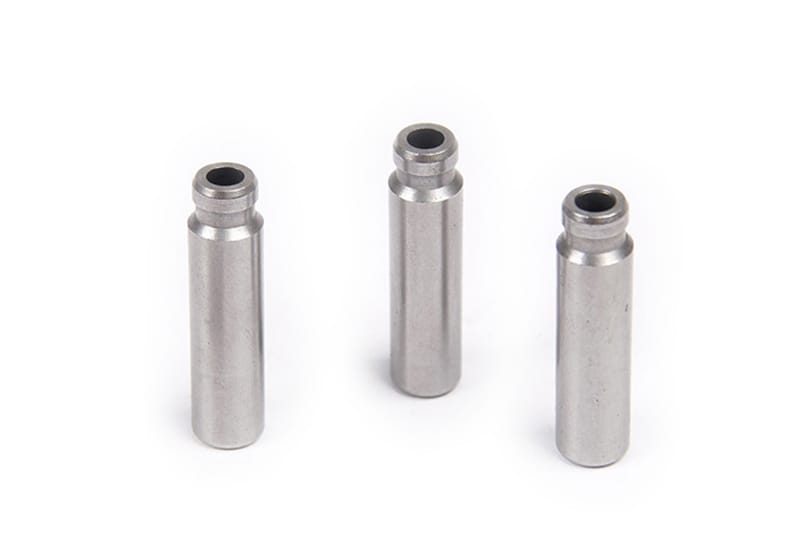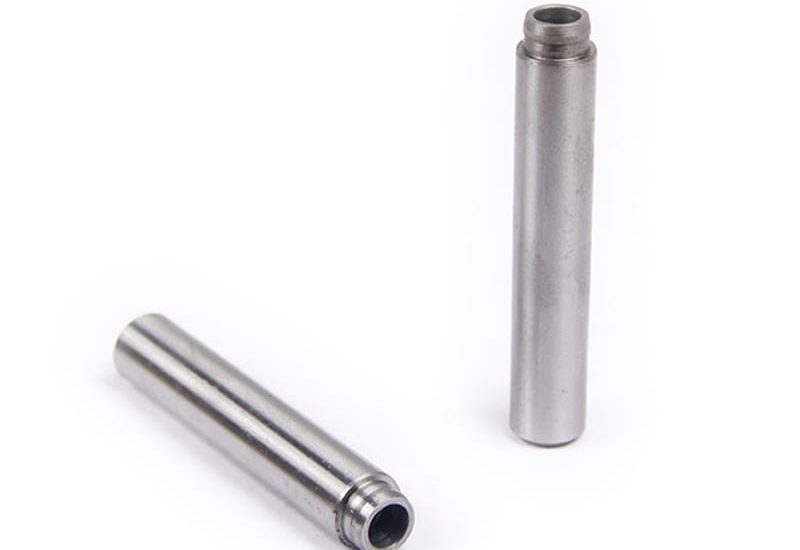
Valve Guides OEM & ODM Company - BLUE
BLUE offers a variety of standard valve guides with no tooling required, manufactured for the aftermarket and compatible with engines from Cummins, Weichai, Ford, Toyota, Mazda, Honda, GM, Volkswagen, Mitsubishi, and more.
BLUE Valve Guides in China
BLUE offers a variety of valve guides for both gasoline and diesel engines, available in materials such as sintered bronze and sintered iron.
Engine Valve Guide
Engine valve guide has a guiding motion for the engine valve to ensure that it is not damped in reciprocating linear motion.
Intake Valve Guide
Intake valve guides help maintain valve alignment for proper sealing and conduct heat away from the valves.
Exhaust Valve Guide
BLUE sintered exhaust valve has good wear resistance, low friction and corrosion resistance.
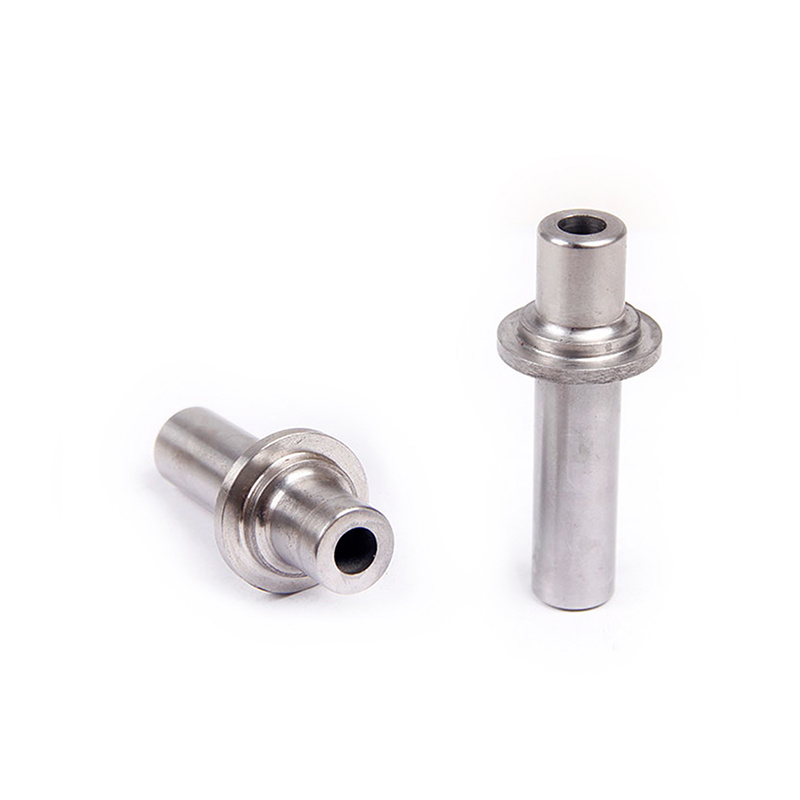
1.8T Valve Guide
BLUE sintered 1.8T valve guide has the benefits of self-lubrication, tight tolerance and light weight.
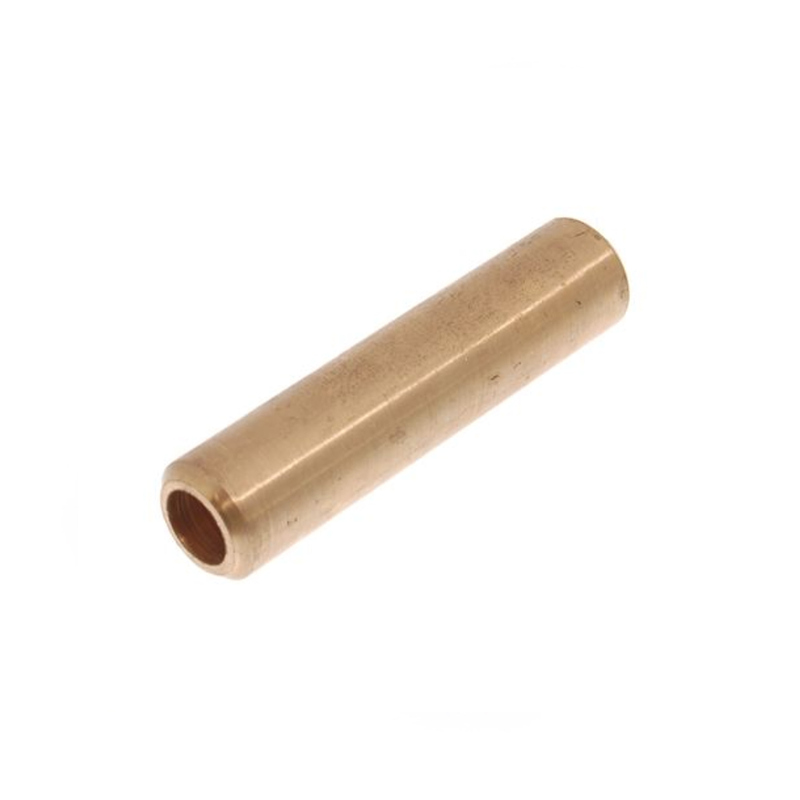
Bronze Valve Guide
BLUE bronze valve guide uses bronze powder as raw material, which has good corrosion resistance and low friction performance.
Motorcycle Valve Guide
BLUE motorcycle valve guide has good heat resistance and thermal conductivity, ensuring the best performance of the engine.
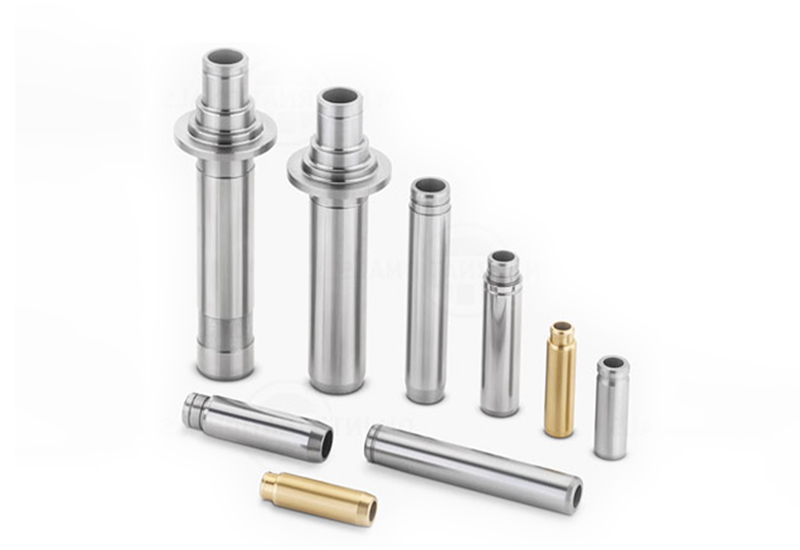
BLUE Valve Guide Advantages
BLUE’s valve guides are manufactured under the supervision of IATF 16949:2016, ensuring reliable quality.
Our valve guides have tight dimensional tolerances, excellent wear resistance and heat resistance, ensuring the precise operation of the valve system.
BLUE valve guides feature a compression strength exceeding 800 MPa and a hardness of over 40 HRC after heat treatment.
Our valve guides are of various types and are suitable for various gasoline and diesel engines, such as Weichai engines, Hino diesel engines, Nissan engines, Mercedes-Benz engines, etc.
Standard Valve Guide Supplier
BLUE is a professional powder metallurgy standard parts supplier in China with rich manufacturing and design experience.
Our standard sintered valve guides cover a variety of gasoline and diesel engines, including intake and exhaust valve guides.
BLUE not only provides standard powder metal valve guides, but also sintered valve seats.
Contact us to get our standard valve guide models or tell us your needs.
Benefits of Sintered Valve Guide
Precision and Consistency
The PM process provides high dimensional accuracy and repeatability, resulting in consistent quality valve guides with tight tolerances.
Enhanced Material Properties
Sintered valve guide has pores inside, and has the characteristics of self-lubrication after oil impregnation, which can reduce friction.
Cost Effectiveness
Sintered valve guides are cost-effective to manufacture in large quantities due to reduced material waste and fewer process steps.
What is a Valve Guide?
Valve guides are cylindrical parts inside the engine cylinder head that guide the movement of the valve stem as it opens and closes. Their main functions include:
Guide the valve to the cylinder, ensuring smooth, precise vertical movement.
Keep the valve properly aligned in the combustion chamber for effective sealing and optimal engine performance.
The valve guide can also transfer the heat of the valve stem to the cylinder head, thereby achieving the purpose of heat dissipation.
Custom Valve Guide Specifications
The table shows our manufacturing capabilities for customized valve guides, including material, density, hardness, tolerance, and surface treatment.
| Attribute | Value |
|---|---|
| Material | Sintered Iron, Sintered Bronze |
| Density | 6.6-7.0g/cm3 |
| Hardened Hardness | Over 40 HRC |
| Surface Treatment | Heat Treatment |
| Tolerance | ±0.01 mm |
| Diameter | 5-40mm |
| Length | 20-100mm |
FAQ's
Here are some of the questions we get asked often. If yours isn’t answered, don’t hesitate to contact us, we’re happy to help!
The main reasons for valve guide failure are as follows:
- Valve guides operate at extremely high temperatures, which can reduce their hardness, cause deformation, and accelerate surface corrosion and oxidation.
- Over time, high-frequency reciprocating friction between the valve and the valve guide increases clearance and wear, potentially leading to guide fracture.
- Additionally, horizontal forces caused by machining or assembly errors between the valve guide, valve, and valve seat insert can also result in failure.