
Self-Lubricating Sintered Bushings Supplier
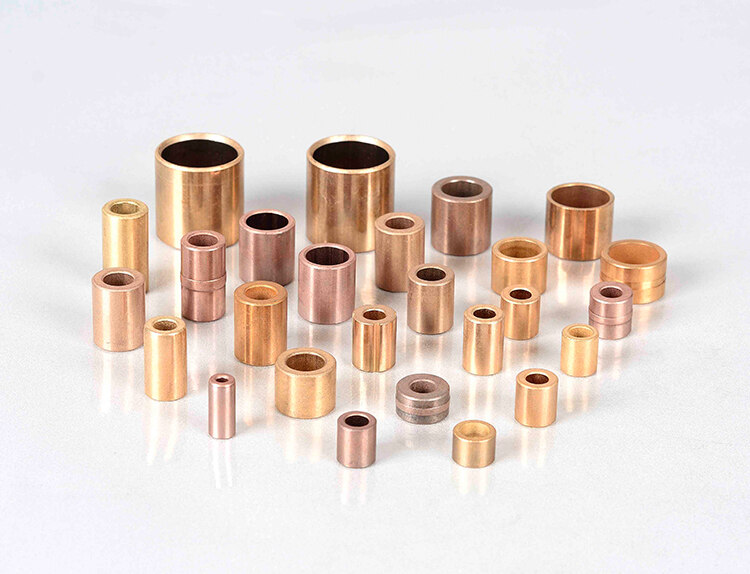
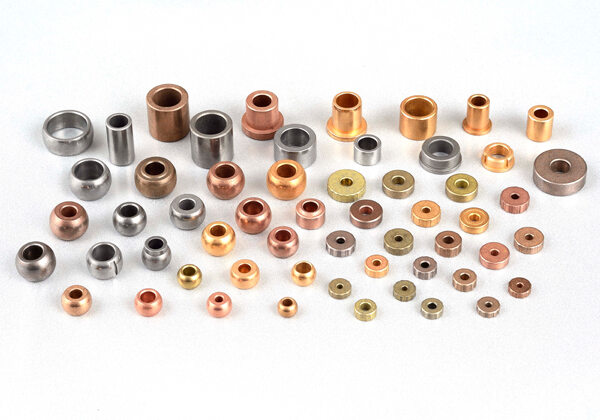
Discover BLUE’s extensive range of sintered bushings in a variety of sizes and shapes, including sleeve, flange, and spherical designs. Our oil-impregnated bushings are available in bronze, iron-based, and iron-copper materials, with oil content ranging from 9% to 27%.
What is a Sintered Bushing?
Sintered bushings are self-lubricating bearings produced by compacting and sintering metal powders such as iron, bronze, or copper to create a porous load-bearing structure. The interconnected pores formed during sintering are then filled with lubricating oil, enabling the bushing to provide continuous lubrication to the shaft during operation without any external grease.
These bushings offer maintenance-free performance, low friction, and strong wear resistance. Sintered bushings are widely used in electric motors, pumps, automotive components, power tools, and industrial machinery where dependable, self-lubricating operation is important.


How Are Sintered Bushings Made?
Sintered bushings are a powder metallurgy product, the production process molds a mixture of metal powders to form a solid material which makes the part. Production commences by pressing metal powders, for example bronze or iron, in fine blend such as a precision die to form the green bushing. The compact is then sin tered in a controlled-at mos phere furnace to a tem per a ture bel ow the metal’s melt ing point to bond parti cles via sol id state dif fu sion, while retain ing the po re net work needed for stor age of oil.
The bushing may be sized after sintering to closer dimension tolerances. The last stage is the impregnation with oil, in which lubricating oil is circulated by means of vacuum or pressure to fill all voids between the interconnected pores. Sintered bushing like these commonly used in electric motors, generators and loudspeakers to retain lubrication, thin oil that is initially stored in the pores while a rotating component is activated.
BLUE's Sintered Bushing Advantages
- High-quality management system
BLUE is ISO 9001:2015 certified and the sintered metal bearings produced are subject to strict quality control.
- Various shapes available
Whether sleeve, flanged, or spherical, BLUE has the ability to manufacture sintered bearings in a variety of sizes and shapes.
- High oil content
The oil-containing bearings produced by BLUE have good self-lubricating effect, and the oil-containing rate can reach 9%-27%, ensuring that your products can perform at their best performance.

Sintered Bushing Materials
Bronze
Sintered bronze oil-impregnated bearings have long service life, low operating noise, corrosion resistance, and are the most widely used.
Iron
Sintered iron oil impregnated bearings have the advantages of low price, excellent self-lubricating performance, fatigue resistance, and high strength. However, they have poor corrosion resistance and the lubrication effect is not as good as bronze.
Iron & Copper
Sintered bushings have good corrosion resistance and are cheaper than bronze sintered bronze bushings.
Standard Sintered Bearing
BLUE offer a multitude of oil-impregnated bushings, including sintered iron bushings, sintered bronze bushings, and sintered iron & copper bushings.
All of these standard oil-impregnated bushings are in stock and available for direct purchase.
Our sintered bronze sleeve bushings come in a range of sizes, with inner diameters from 3mm to 60mm, outer diameters from 5mm to 70mm, and lengths from 3mm to 65mm.
Free download our full list of sintered bushings by clicking below!

Working Principle of Sintered Bushings
During the operation of the sintered bushing, the lubricating oil expands from its pores under the suction of the rotating shaft and the influence of the temperature rise, forming an oil film to reduce friction.
When the oil impregnated bushing stops working, the capillary force sucks the lubricating oil back into the pores of the sintered bushing.
However, when the machine starts up, the speed is low and the lack of hydraulic pressure causes direct contact between the bearing and the shaft. This leads to increased friction, wear and temperature rise, which may cause loss of lubricating oil.
Applications of Oil Inpregnated Bushings
Oil impregnated bushings have low cost, good self-lubrication effect, low maintenance cost, and are widely used.
Automobile
Electric windows, electric seats, wiper motors, starter motors, cooling systems, brake systems, etc. in automobiles
Industry
Assembly machinery, copiers, sewing machines, automation equipment, electrical switchgear, agricultural machinery, etc.
Household appliances
Fans, coffee machines, juicers, depilators, barbecue machines, vacuum cleaners, lawn mowers, air conditioners, hand tools, etc.

Sintered Bushing Specifications
The following are the specifications of density and oil content of bronze sintered bushings, iron-based sintered bushings, iron & copper sintered bushings.
| Material | Density | Oil Content |
|---|---|---|
| Bronze Sintered Bushings | 5.8-7.6 g/cm3 | 9-27% |
| Iron-based Sintered Bushings | 5.6-6.4 g/cm3 | 17-21% |
| Iron & Copper Sintered Bushings | 5.6-6.4 g/cm3 | 17-22% |
FAQ's
Here are some of the questions we get asked often. If yours isn’t answered, don’t hesitate to contact us, we’re happy to help!
As we know, sintered bushings contain numerous internal pores, which makes them suitable for oil impregnation.
Typically, the bushings are placed in a mesh basket and submerged in an oil tank. A vacuum is then applied to remove air from the pores, allowing the oil to fill them.
Afterward, air is reintroduced to create atmospheric pressure, further pushing the oil into the bushing’s pores.
Custom Sintered Bushing Now!