
China Sintered PTFE - BLUE
BLUE’s sintered PTFE features precise filter rating, excellent meechanical properties, and high-temperature resistance. Our high-quality, competitively priced porous PTFE are recognized by customers in over 50 countries.
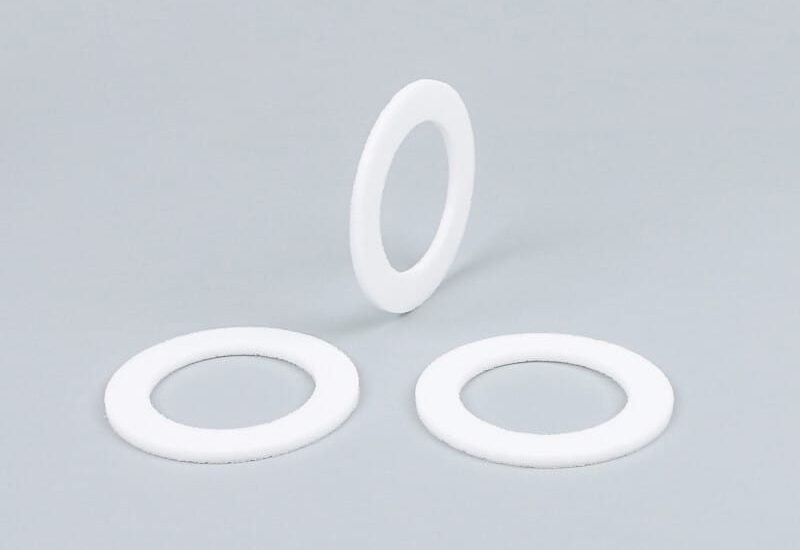
BLUE's Sintered PTFE Advantages
With over ten years of experience in sintered filter production, BLUE is your trusted sintered PTFE supplier.
ISO 9001:2015 certified, we utilize advanced vacuum sintering furnaces and machining equipment to ensure high-quality products.
BLUE sintered PTFE overcomes the shortcomings of pure PTFE such as poor wear resistance and large thermal expansion coefficient by adding bronze.
Based on your customized requirements, BLUE can manufacture sintered PTFE filters in various filtration accuracies, shapes, and sizes.
Standard Porous PTFE
At BLUE, you’ll find a wide selection of standard sintered PTFE filters, available in various filtration ratings and shapes—all in stock for fast delivery.
Along with our standard sintered PTFE filters, we also offer a full range of standard sintered bronze filters, stainless steel filters, titanium alloy and nickel filters to meet all your filtration needs.
Just reach out to our team for tailored solutions if you have custom needs.
Free download our complete product list by clicking the links below.
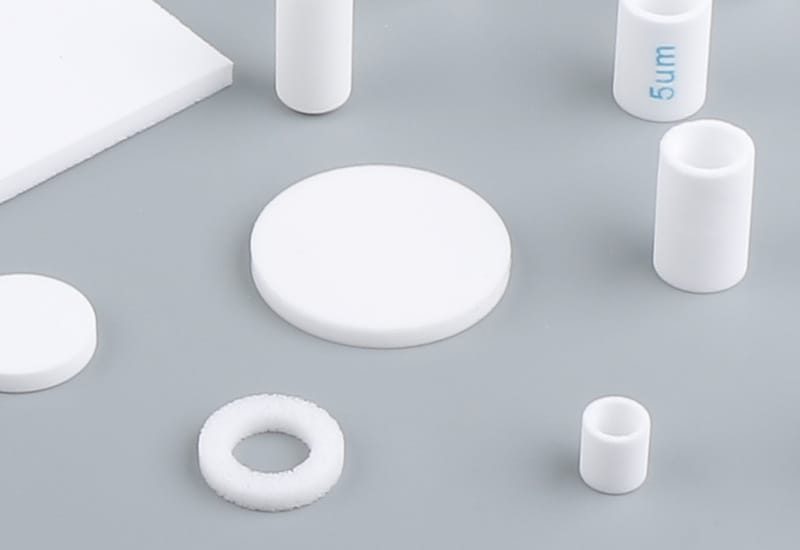
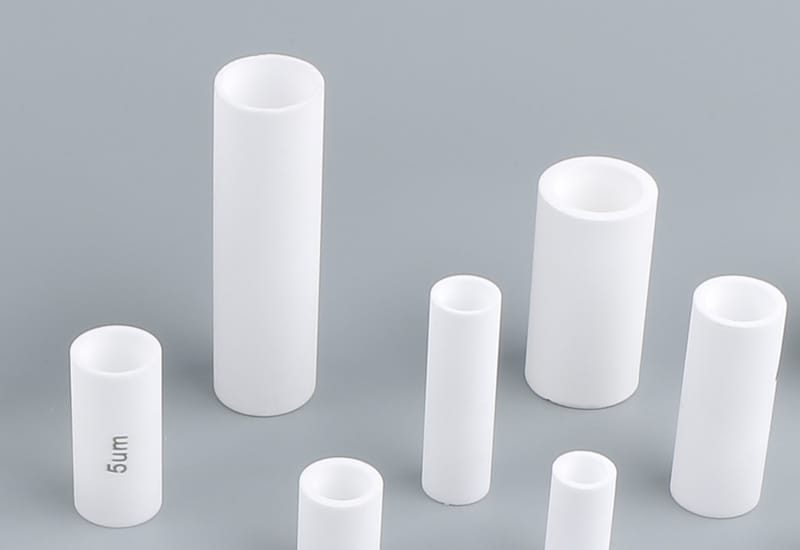
Advantages of Porous PTFE
Sintered PTFE has natural hydrophobicity, good strength, and good chemical stability.
Compared to other sintered plastics, such as sintered PE, sintered PTFE has higher temperature resistance up to 260°C.
Sintered PTFE has smooth inner and outer surfaces.
Sintered PTFE has stable chemical properties and can resist various acids, oils, polar aprotic solvents, polar protic solvents, aromatic solvents, and halogenated solvents.
Applications of Sintered Teflson
Industrial applications
Sintered PTFE has good corrosion resistance and is suitable for pipes, valves, sealing parts, etc. in the chemical industry.Medical application
Porous PTFE has good chemical stability and corrosion resistance and can be used to transport drugs or as medical devices.
Food and beverage industry
PTFE is hydrophobic and has good high temperature resistance, making it an ideal material for non-stick pan surface coating.
Electronic industry
Sintered porous PTFE has good insulation and high temperature resistance and is suitable for insulation protection of wires and cables.

Comparison of Different Porous Plastic Filters
PE is a lightweight and strong sintered filter, PP offers larger pore sizes, and PTFE is ideal for high-temperature and corrosion-resistant applications.
| Material | Filtration Ratiing | Porosity | Max. WorekingTemperature |
|---|---|---|---|
| PE | 0.5μm to 150μm | 18% to 50% | 80°C |
| PP | 0.5μm to 150μm | 18% to 50% | 120°C |
| PTFE | 0.3μm to 200μm | 18% to 60% | 260°C |
| PVDF | 1μm to 200μm | 30% to 40% | 150°C |
PTFE vs. PE & PP
Compared with other sintered plastics, sintered PTFE has better high temperature resistance, strength and application range.
| Chemicals | PTFE | PE | PP |
|---|---|---|---|
| Acids | Great | Great | Great |
| Oxidizing agents | Great | Not Good | Not Good |
| Oil | Great | Moderate | Moderate |
| Polar-aprotic solvents | Great | Moderate | Moderate |
| Polar-Protic solvents | Great | Moderate | Moderate |
| Aromatic solvents | Great | Not Good | Not Good |
| Non-polar aliphatic solvent | Great | Moderate | Moderate |
| Halogenated solvent | Great | Not Good | Not Good |
FAQ's
Here are some of the questions we get asked often. If yours isn’t answered, don’t hesitate to contact us, we’re happy to help!
Polytetrafluoroethylene (PTFE) is a synthetic fluoropolymer of tetrafluoroethylene, a high molecular polymer, also known as Teflon.
Sintered PTFE has the advantages of acid resistance, alkali resistance, oil resistance, resistance to various organic solvents, high temperature resistance, good strength, and low friction coefficient.
Both ePTFE and PTFE offer excellent corrosion and high-temperature resistance.
Sintered PTFE has high strength, making it suitable for sealing components like pipes and valves, as well as for filtration and protective wrapping.
Expanded PTFE, while more brittle, is valued for its biocompatibility, making it ideal for medical implants.
PTFE powder has poor fluidity even when heated to its melting point. PTFE is non-toxic in normal state, but will release toxic ions by pyrolysis at temperatures above 380°C.
Get Your Sintered PTFE Now!