

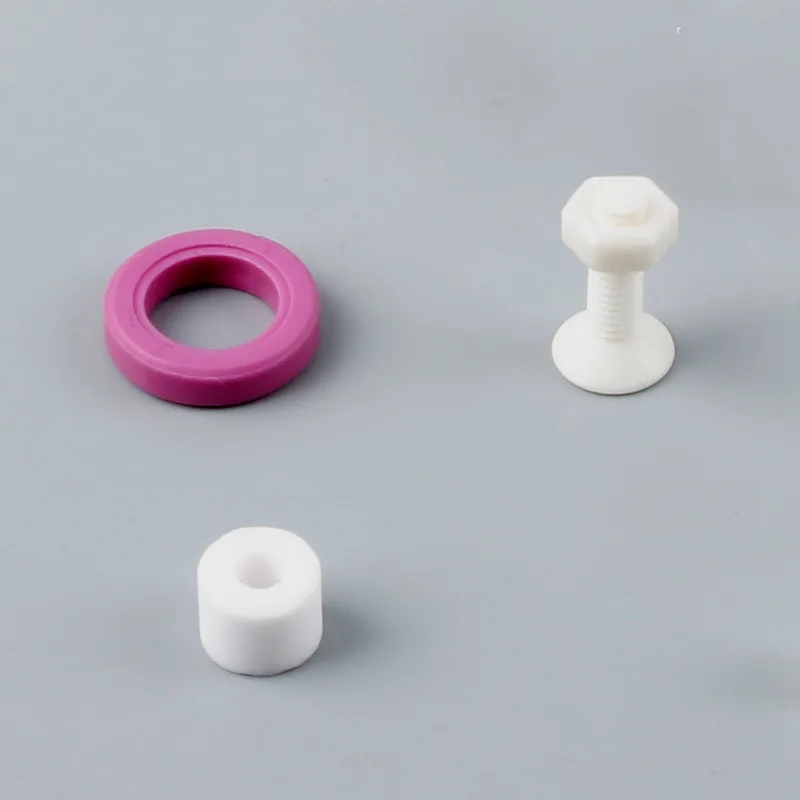
Sintered alumina is famous due to its high hardness, wear resistance, thermal stability, and chemical inertness. Sintered alumina is produced through powder compaction at room temperature and subsequent high-temperature sintering, which densifies the alumina into a stable polycrystalline ceramic.
The controlled densification process minimizes porosity, which improves load-bearing capability and provides long-term reliability under thermal, chemical, and mechanical stress. As a result, sintered alumina is widely trusted for demanding industrial and high-performance applications.
Contents
What is Sintered Alumina?
Sintered alumina is a compacted, thermally treated alumina powder that is compacted to produce a dense ceramic material. This is virtually close to being completely densified with a density of approximately 3.60 – 3.98 g/cm3, depending on purity and sintering conditions. In sintering, the individual alumina particles are bonded together through diffusion processes. The typical sintering temperature is 1550 to 1750 °C.
High-purity sintered alumina is widely used in technically demanding applications where chemical stability, electrical insulation, and mechanical reliability are required.(High purity depends primarily on the quality of the starting alumina powder, while controlling the sintering parameters…)
Sintered alumina parts exhibit high strength, good wear resistance, chemical stability, and thermal stability. These properties support their wide use in electronic components, insulating substrates, high-temperature structural parts, and wear-resistant components.
In practical engineering terms, sintered alumina is one of the most widely adopted sintered ceramics, valued for its balance of mechanical strength, chemical stability, and thermal reliability.
The Manufacturing Process of Sintered Alumina
Powder Preparation
Alumina powder of high purity is chosen, commonly through either chemical synthesis (e.g., sol-gel or precipitation) or via mechanical milling to reach a fine and uniform particle size. Milling (ball, planetary, or jet) breaks up agglomerates and gives a uniform packing process.
Small quantities of binders (e.g., PVA or wax) and lubricants (such as stearic acid) are introduced to facilitate subsequent shaping, enhancing filling of the molds and making them less difficult to press. This precautionary planning supports an even distribution of particles, excellent flow, and reduced defects (e.g., porosity, density variation) in the resultant ceramic.
Forming
Pressing
Powder is shaped into a green body using dry pressing or isostatic pressing. Dry pressing applies high uniaxial or biaxial pressure for simple geometries, while isostatic pressing uses uniform fluid pressure to achieve homogeneous density in complex shapes. Pressure levels vary from tens to hundreds of MPa depending on part size. Pressing ensures particle contact and initial mechanical integrity, setting the stage for uniform densification during sintering.
Injection Molding
Alumina powder is mixed with a polymer binder to form a low-viscosity slurry, then injected into molds under heat and pressure. After demolding, the part undergoes drying and binder removal. Injection molding allows complex, small components with tight tolerances and high production efficiency. Injection molding is commonly used to produce small, complex alumina components for medical and electronic applications.
Casting
Slip casting and tape casting form parts from an alumina slurry. In slip casting, the slurry fills a porous mold, which absorbs liquid and leaves a solid layer. Tape casting spreads slurry onto flat surfaces to produce thin sheets for multilayer electronics. Casting techniques are ideal for intricate shapes or thin ceramic components.
Sintering
The bodies are sintered at high temperature in order to densify and consolidate the ceramic into the green bodies. Pressureless sintering involves a temperature range between 1600-1800 °C, possibly with lower limits based on purity and powder nature, in controlled-atmosphere furnaces; the residence period can be several hours to enable diffusion and pore removal. In this case, diffusion of alumina particles occurs, resulting in a decrease in porosity and an increase in a dense polycrystalline structure.
In high-performance ceramics, hot isostatic pressing (HIP) or hot pressing is used, in which high temperature and pressure (up to hundreds of MPa) are applied simultaneously to obtain extremely high density and homogeneous microstructure. New methods have been shown, including two-step sintering (TSS) (e.g. a high rate initial densification step to a freezing point density, then traditional sintering finishes densification to form fine-grained dense alumina with higher mechanical strength).
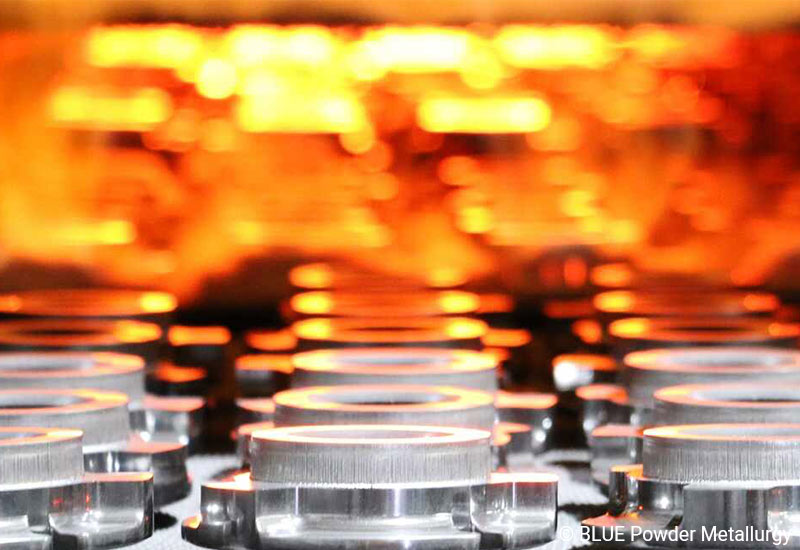
Spark plasma sintering (SPS) employs rapid heating rates and applied pressure to achieve high density and refined microstructures within short processing times.
Post‑Sintering Finishing & Quality Assurance
Since sintered alumina is relatively hard and brittle, it might be necessary to finish it to allow dimensional or surface-smoothness specifications. Very hard abrasives (silicon carbide, boron carbide, or diamond) are used in progressive stages of machining, grinding, lapping, or polishing.
Density, porosity, dimensional accuracy, and surface integrity are inspected after completion, and only parts without defects are allowed to go to final use or packaging.
Characteristics of Properties
Mechanical Properties
Sintered alumina ceramics havehigh mechanical strength. The Vickers hardness of them may go up to values as high as high-purity alumina (approximately 15 Gpa), making alumina one of the hardest engineering ceramics. Dense alumina shows compressive strength of 2000–3000 MPa and flexural strength of 300–400 MPa, making it suitable for applications dominated by compressive and wear loads.
The Young’s modulus of sintered alumina typically ranges from 300 to 380 GPa, indicating high stiffness and only small elastic deformation under applied mechanical stress.. Thermal Properties
The sintered alumina is thermally stable, and in terms of conduction and dimensional stability, sintered alumina is useful. Long-term operating temperatures for high-purity alumina in air are typically up to about 1400–1600 °C, with short-term exposure possible up to ~1700 °C depending on grade and atmosphere. At room temperature (high-purity alumina), its thermal conductivity is usually 24-30 W/(mK), which is also large in a ceramic and useful in areas where it is needed to dissipate heat or transfer it.
Sintered alumina has a relatively low coefficient of thermal expansion, typically ranging between about ~ 7–8 × 10⁻⁶ /°C, and thus it will be able to withstand thermal expansion and contraction without dimensional changes.
Electrical Properties
Sintered alumina is an excellent electrical insulator, with room-temperature volume resistivity typically exceeding 10¹⁴ Ω·cm and dielectric strength in the range of 15–20 kV/mm.
At frequencies around 1 MHz, it has a stable dielectric constant of approximately 9–10 and low dielectric loss, supporting its use in electronic substrates, power modules, and RF-related components.
Chemical Resistance
The chemical inertness and corrosion resistance are two of the strongest advantages of alumina. is appropriate in chemical processing, corrosive fluids, and other harsh environments.
Applications of Sintered Alumina
Electronic Applications
Sintered alumina exhibits excellent electrical insulation and stable dielectric behavior, which support its use in high-voltage insulators, semiconductor substrates, and electronic housings. Its thermal and dimensional stability make it suitable for electronic packaging applications that operate under elevated temperatures and electrical stress, including vacuum tubes, LED packages, and power modules.
Medical Applications
High-purity sintered alumina is non-toxic and biocompatible. It is widely used in medical applications such as implants and prosthetics, including artificial joints, dental implants, and orthopedic components.
Structural Components
Sintered alumina is applied as a structural ceramic in selected mechanical and industrial systems where high stiffness and chemical inertness are required. Typical applications include structural electrical insulators, precision alignment components, valve seats and bodies, and pump liners.
Filtration
Filtration media: Aggressive chemical or high-temperature fluids. Alumina ceramics can also be used in filtration media. Sintered alumina is used in filters in chemical processing, molten metal handling, or other types of environments where metals or polymer filters would be ineffective due to their chemical inertness and corrosion resistance.
Refractory Uses
Alumina ceramics have a very high melting point and can be used as refractory materials in furnaces, kilns, and high-temperature industrial operations. Alumina is used to manufacture components of furnace lining, kiln furnishings, crucibles, nozzles, and transfer tubes of molten metal in an attempt to utilise its properties of stability at high temperatures and in corrosive slags.
Wear Applications (Wear Parts, Friction & Abrasion Components)
Alumina has high hardness and abrasion resistance; consequently, it is employed as wear parts: bearings, valve seats, seals, liners, cutting tools, grinding media, pump components, and other parts that are exposed to friction, abrasion, or sliding contacts. Alumina has a higher life cycle than similar metal components in most instances and thus minimizes the number of times maintenance or downtime is incurred in factories.
Sintered Alumina vs. Sintered Silicon Carbide
The table below compares the physical and mechanical properties of sintered alumina and sintered silicon carbide, highlighting their differences in hardness, density, thermal conductivity, machinability, and densification behavior.
| Property / Feature | Sintered Alumina | Sintered Silicon Carbide |
|---|---|---|
| Hardness (Mohs) | 9 (among the hardest oxide ceramics) | ~9–9.5 (slightly harder than alumina) |
| Density (g/cm³) | 3.98 | 3.1–3.2 |
| Thermal Conductivity (W/m·K) | 20–40 | 120–270 (much higher than alumina) |
| Fracture Toughness (MPa·m½) | 2.5–4 | 3–4.5 |
| Machinability | Moderate; can be ground or polished | Difficult; often requires diamond tools |
| Density of Pores | Near full density achievable with HIP or SPS | Higher porosity in pressureless sintering; HIP improves density |