
Timing Chain Sprocket - BLUE
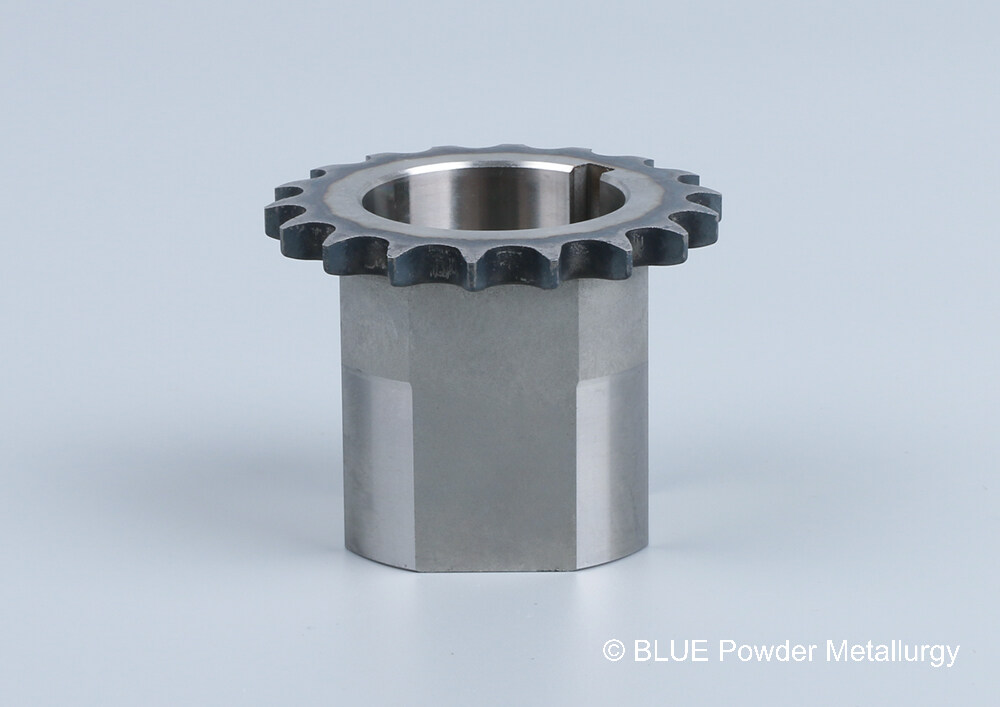
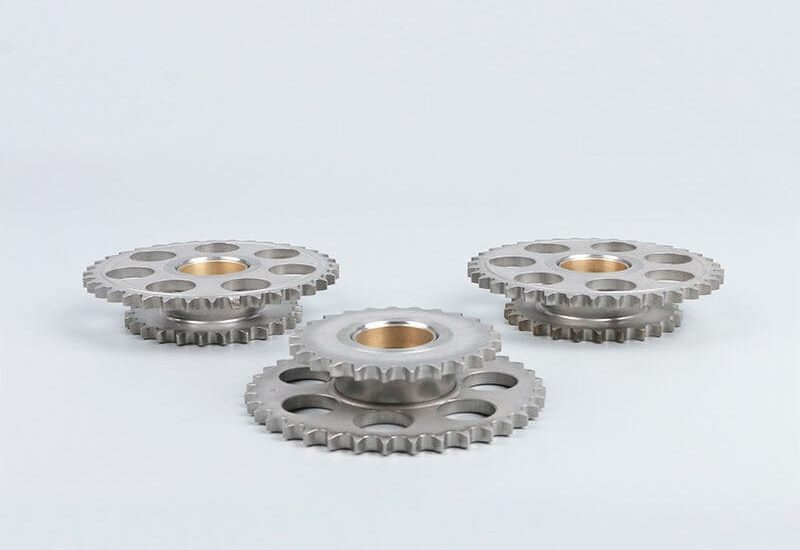
BLUE provides 500 standard timing chain sprockets including camshaft sprocket and crankshaft sprocket without mold fee. Our timing sprockets are applied to Toyota, Honda, Volkswagen, BMW, Audi, Chevrolet, Peugeot, etc.
What are Timing Chain Sprocket?
Timing chain sprockets are precision gears mounted on the crankshaft and camshaft(s). They work with the timing chain to keep these shafts rotating in perfect sync so the engine valves open and close at the correct moments during the four stroke cycle.
The system uses a larger crankshaft sprocket and smaller camshaft sprockets. Their teeth engage the chain to transfer motion, similar to how a bicycle chain runs on multiple gears, and this maintains accurate engine timing.
Because sprockets wear over time, they are often replaced together with the timing chain to avoid timing errors, misfires, and reduced engine performance.
Timing Sprocket Manufacturing Process
Timing chain sprockets are commonly produced using P/M or precision machining. In P/M, metal powders are compacted in a die under high pressure to form the gear shape, then sintered at elevated temperatures to achieve strength and dimensional accuracy. This process is ideal for high-volume automotive sprockets because it provides uniform density, consistent tooth geometry, and excellent wear resistance.
After sintering, secondary operations are applied to meet tight tolerances. These may include sizing, CNC machining for critical bores or keyways, surface hardening such as carburizing or induction hardening, and final deburring. When required, grinding is used on functional surfaces to achieve high precision.
For forged or fully machined sprockets, alloy steel is forged into a blank, machined to final dimensions, and heat-treated to obtain tooth hardness and durability. Both methods aim to produce sprockets with stable tooth profiles, high fatigue strength, and long service life in the timing system.
BLUE Timing Chain Sprocket Advantages
BLUE’s powder metallurgy auto parts are produced under the IATF 16949: 2016 quality management system.
We provide you with timing chain sprockets with precision teeth and holes, which fit perfectly with your chain and camshaft or crankshaft.
BLUE timing chain sprocket teeth are surface-hardened to a high hardness of 40HRC, offering excellent strength and wear resistance
Our timing chain sprockets have a density of up to 7.0 g/cm3 after sintering and have good mechanical properties.
Standard Timing Sprocket Supplier
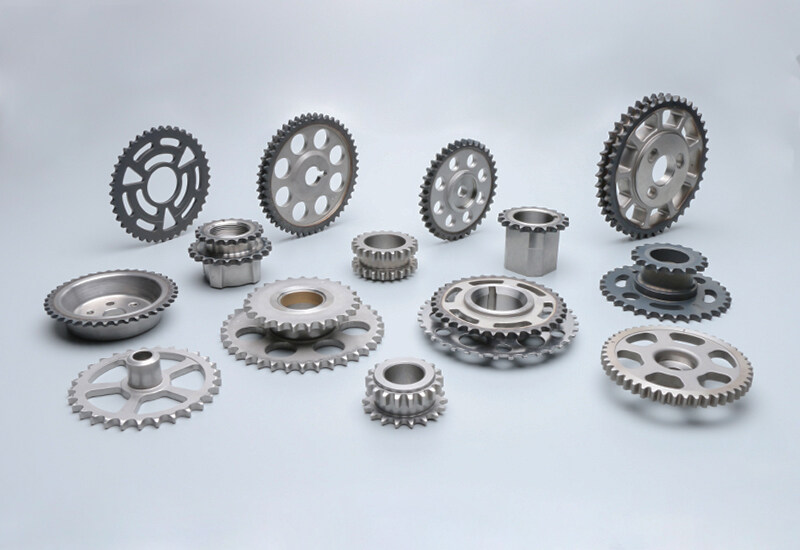
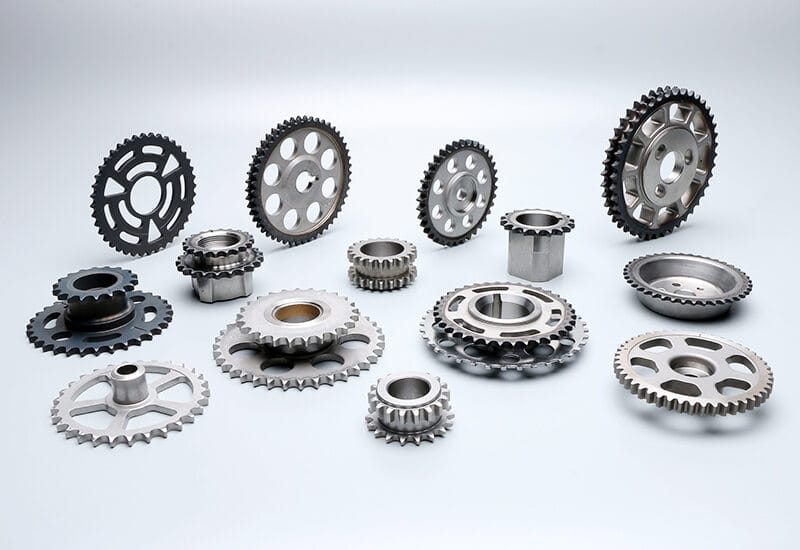
BLUE is one of the largest powder metallurgy standard parts companies in China, we provide a wide range of timing sprockets.
Our standard timing chain sprockets include camshaft sprockets and crankshaft sprockets.
BLUE standard timing chain sproket has good mechanical strength and strict dimensional tolerances.
Download our standard timing chain sprockets product list for free by clicking below.
Sintered Timing Chain Sprocket Benefits
Cost-Effective Mass Production
Compared to machined timing sprockets, powder metallurgy timing chain sprockets generate less material waste and require fewer processing steps.
Tight Tolerances
Sintered timing chian sprockets can achieve strict tolerances of ±0.01mm after the sizing process.
High Quality Consistency
Powder Metal timing chain sprockets offer excellent batch-to-batch quality consistency.
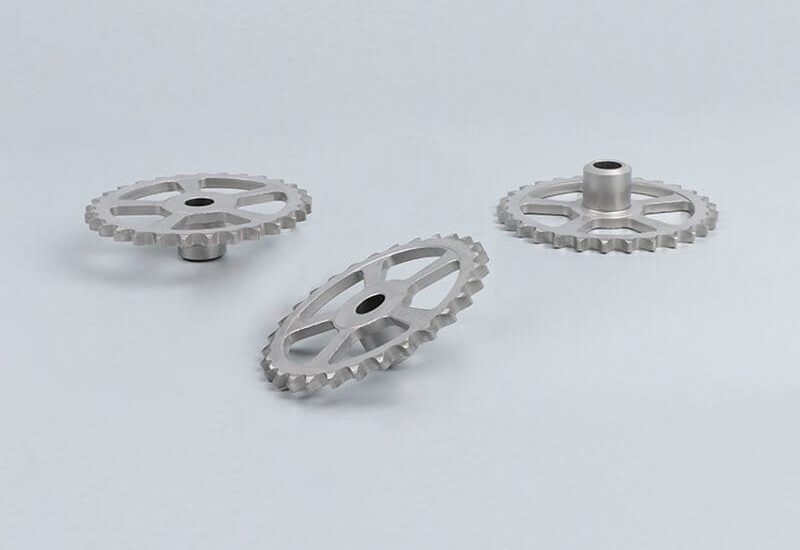
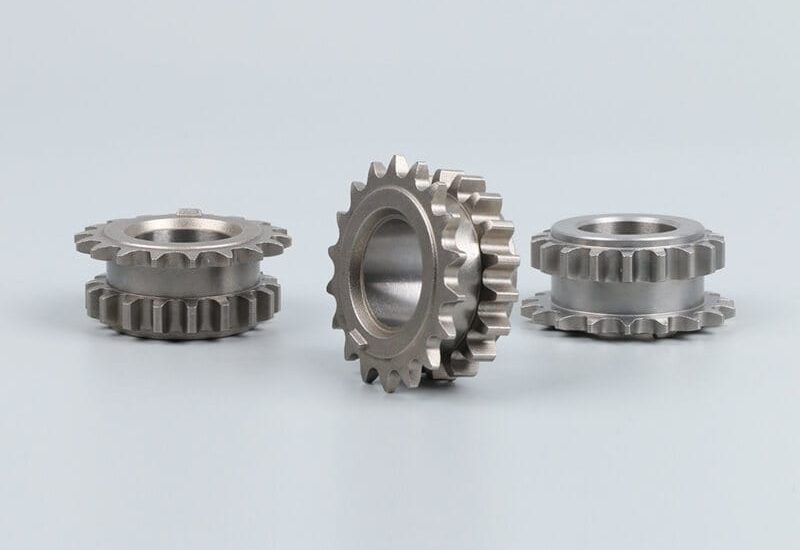
What is a Timing Chain Sprocket?
Timing sprockets are basic parts of the timing system in an internal combustion engine.
Connected to the camshaft or crankshaft, they drive the timing chain, ensuring the camshaft and crankshaft remain synchronized.
This synchronization allows the engine’s intake and exhaust valves to open and close at the correct times, matching the piston’s movement.
Custom Timing Chain Sprocket Specifications
The following table shows BLUE’s production capabilities for timing chain sprockets, including material, density, hardness, tolerance, diameter range, length, surface treatment, etc.
| Attribute | Value |
|---|---|
| Material | MPIF 35, FC-0205. FC-0208, FN-0205, FD-0208 |
| Density | 6.6-7.0g/cm3 |
| Hardness | 65-90 HRB |
| Surface Treatment | Blackening |
| Tolerance | ±0.01 mm |
Get Your Timing Chain Sprocket Now!