Stainless Steel Injection Molding
We are a specialized metal injection molding manufacturer with extensive expertise in stainless steel injection molding. Our capabilities cover all major stainless steel MIM grades, including MIM 17-4PH, MIM 316L, MIM 304, MIM 420, MIM 430, and MIM 440C.
Why Choose BLUE?
BLUE is an ISO 9001:2015 certified metal injection molding and powder metallurgy supplier. We provide standard parts without tooling fees.
BLUE High Quality Standards
BLUE assures your product quality with ISO 9001:2015 certified quality management system. We provide a one-year warranty on your metal injection molding products.

Standard Parts Shop
BLUE has a wide range of standard MIM stainless steel parts in stock for fast delivery. Visit our standard parts shop to find the exact match for your applications.
OEM/ODM Services
Using advanced equipment, we provides free mold design based on your drawing and offers assistance with your cotomized product processing.
What is Stainless Steel Injection Molding?
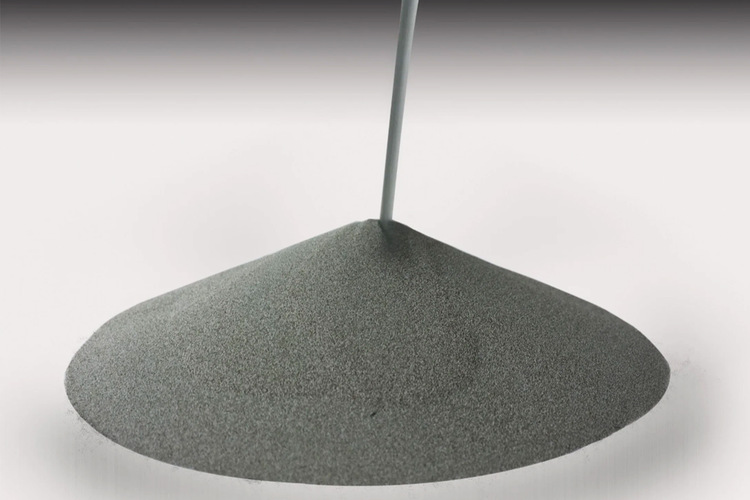
Stainless steel injection molding is the production of stainless-steel components through the Metal Injection Molding (MIM) process. Fine stainless-steel powders such as 316L, 17-4PH, and 304L are blended with polymer binders to form a uniform feedstock. The feedstock is injected into precision molds to create a green compact.
The molded parts are then debound to remove the binder system. After debinding, the brown parts are sintered at high temperature to achieve near-full density. The sintered components exhibit complex geometries, tight dimensional control, and surface finishes comparable to machined parts.
Final parts typically reach densities of 94–99%. The sintered components maintain the corrosion resistance of stainless steel and exhibit mechanical properties close to wrought grades.
Stainless Steel Metal Injection Molding Process
Stainless steel metal injection molding (MIM) process is a near-net-shape manufacturing process that produces complex components with high density and tight tolerances. Fine stainless steel powders, such as 316L or 304, are blended with binders to create a uniform feedstock. This feedstock is injected into precision molds to form a green part with the required geometry.
After molding, the green part undergoes debinding to remove the binder system and create a porous brown part. The brown part is then sintered at 1200–1380 °C, where the stainless steel particles diffusion-bond and the component densifies. The final sintered part typically reaches a density of 94–99%, maintains the corrosion resistance of stainless steel, and exhibits mechanical properties close to wrought grades.
MIM is capable of producing miniature, intricate, or high-precision stainless steel components that are difficult to achieve through machining or casting.
Stainless Steel MIM Materials
316L stainless steel is the most widely used MIM alloy due to its excellent corrosion resistance, good ductility, and stable sintering behavior. Typical MIM 316L parts achieve densities of 96–99% and tensile strengths of 450–550 MPa. MIM 316L is widely used for medical instruments, consumer electronics, and components requiring high toughness and biocompatibility.
17-4PH stainless steel is another major MIM grade, valued for its high strength and hardness after precipitation hardening. MIM 17-4PH commonly reaches tensile strengths of 900–1200 MPa, offering a strong balance of mechanical performance and corrosion resistance.
Other MIM-capable stainless steels include 304L for general corrosion-resistant applications, 410 and 420 for martensitic parts requiring hardness levels in the 45–52 HRC range, and 430 for ferritic components where magnetic properties are needed.
Applications of Stainless Steel Injection Molding
Stainless steel injection molding is widely used in consumer electronics, where small, high-strength components such as hinges, buttons, structural brackets, and connector housings require tight tolerances and corrosion resistance. The process supports thin-wall geometries and fine details, making it suitable for compact devices and wearable products.
In the automotive industry, MIM stainless steel is applied to sensor housings, locking mechanisms, fuel system components, EGR and turbocharger parts, as well as drivetrain and interior hardware that require durability and precise dimensional control. Its ability to produce complex shapes reduces machining and improves consistency in high-volume production.
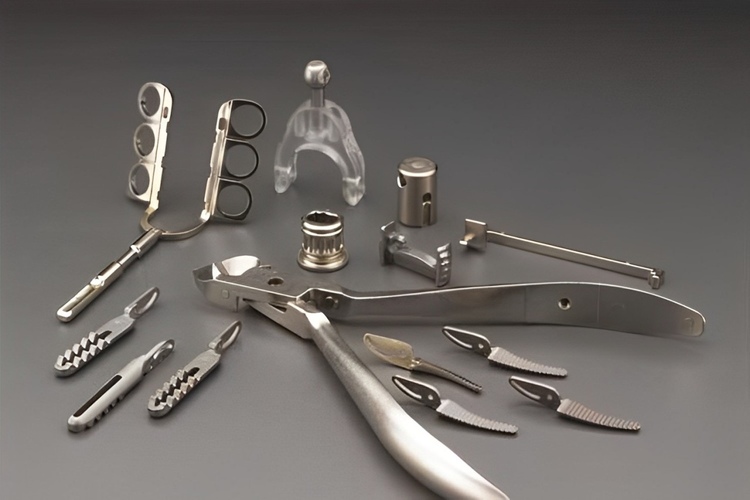
MIM stainless steel is also important in medical devices, particularly for surgical instruments, orthodontic components, endoscopic parts, and implant-grade components made from 316L. MIM provides high strength, biocompatibility, and excellent surface quality, which are important for medical performance and sterilization resistance.
Advantages of MIM Stainless Steel
MIM stainless steel parts achieve high density, typically 94–99%, delivering mechanical strength, corrosion resistance, and fatigue performance comparable to wrought materials. MIM provides a cost advantage for high-volume production due to its high degree of automation and material utilization exceeding 95%. The parts also exhibit a fine surface finish of approximately 1 μm Ra.
In terms of dimensional accuracy, MIM can achieve tolerances of ±0.3–0.5%, with certain features reaching ±0.05 mm after post-processing. The excellent formability allows wall thicknesses as low as 0.3–0.5 mm, supporting extremely thin-walled structures and micro-scale features.
Custom MIM Parts Capabilities
The following are BLUE’s custom MIM stainless steel parts capabilities, including part mass, size, wall thickness, surface roughness, and tolerance.
| Attribute | Value |
|---|---|
| Part Mass | 0.2 to 100g |
| Size | Diameter 1-30 mm. |
| Wall thickness | 0.5-12.5 mm |
| Torlances | ±0.5% |
| Density | 95%-99% |
| Surface Finish | Ra 1 μm |
Metal Injection Molding Parts Gallery
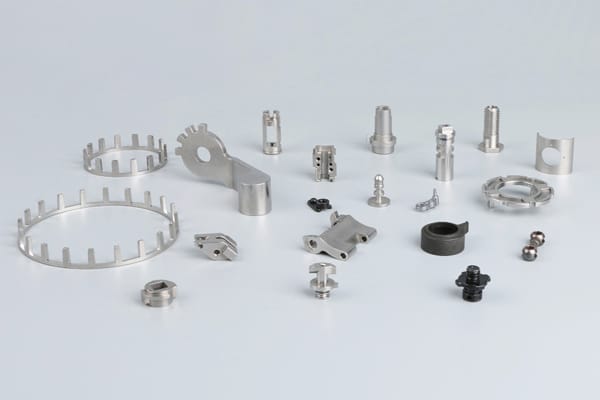
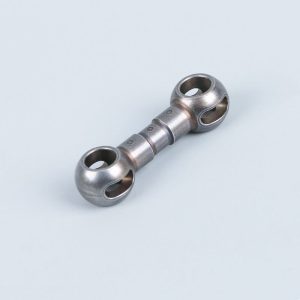
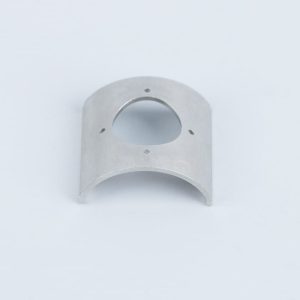
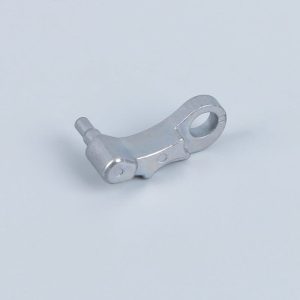
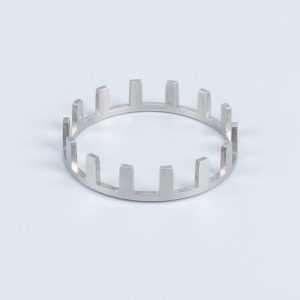
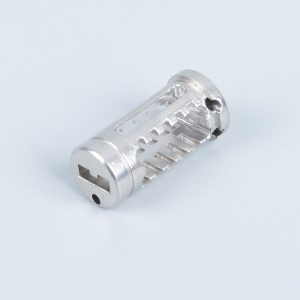
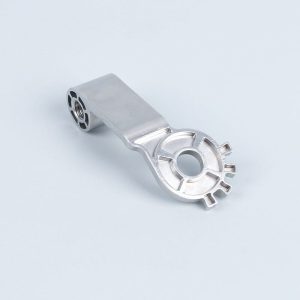
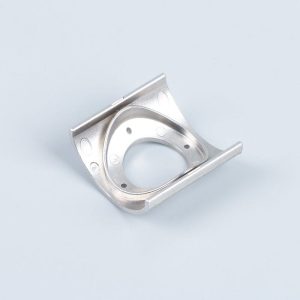
Below are some of the metal injection molded parts we have produced.